
Check Siding for Impact, Movement, Openings, and Water Paths
Storm damage may appear as cracks, dents, holes, loosened panels, shifted seams, damaged corners, or problems around openings and transitions.
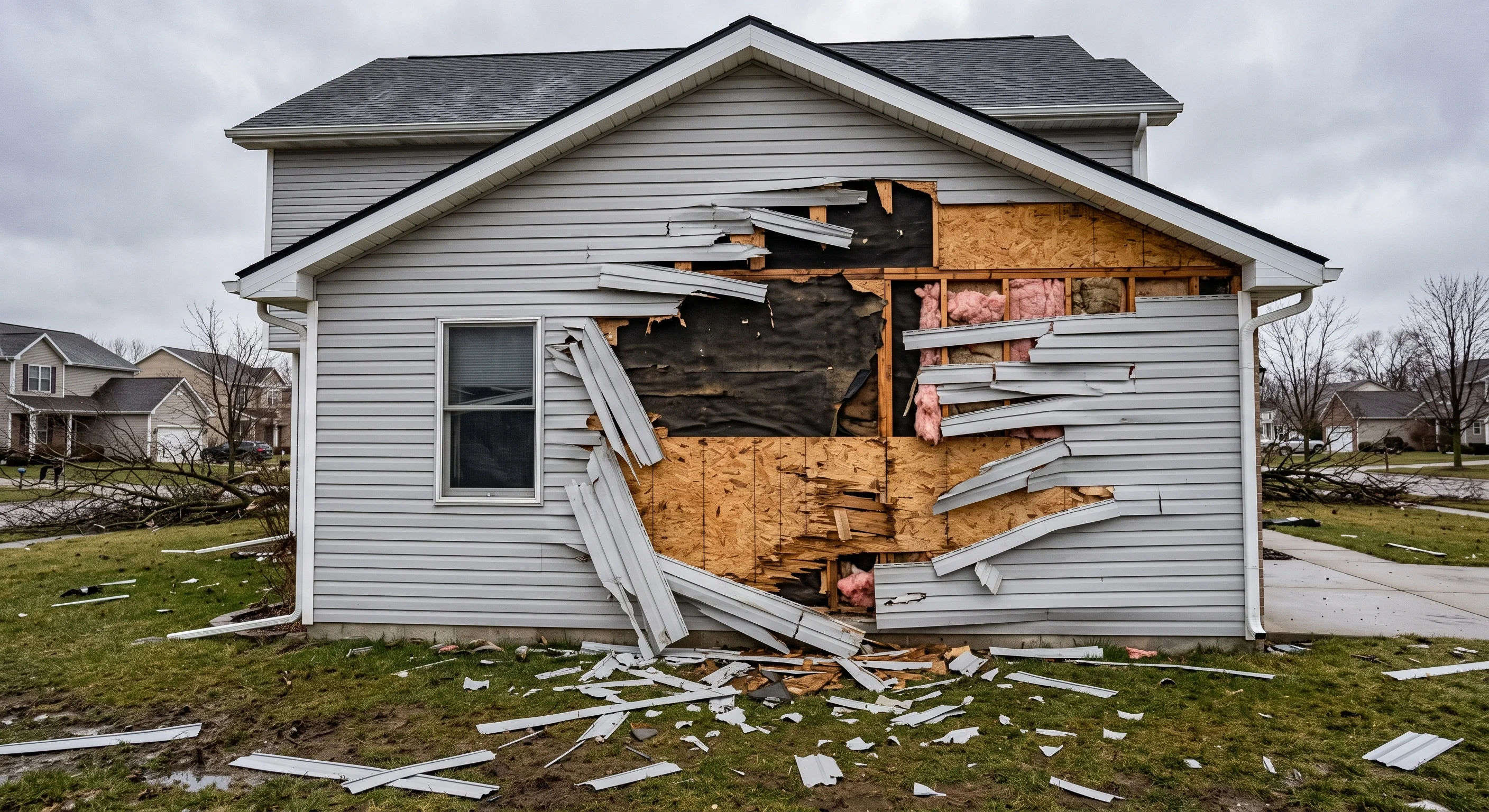
Matching and repairability matter
A small damaged area does not automatically mean full replacement, but product availability, weathering, attachment, and surrounding condition affect repair options.
Siding Repair
Review focused repair considerations.
Explore Siding Repair →Siding Replacement
See when broader work may be practical.
Explore Siding Replacement →Storm Inspection
Understand the full exterior assessment.
Explore Storm Inspection →Useful signs, questions, and decision factors
The right next step depends on the condition of the affected material, the surrounding assembly, compatibility, access, and the goals for the home.
- Hail dents, chips, cracks, or punctures
- Wind-loosened or missing panels
- Debris impact at walls, corners, and trim
- Open seams or changes around windows and doors
From concern to clear next step
Observe from safe locations
Document elevations and details
Assess damage and compatibility
Review repair or replacement direction
Siding Storm Damage FAQs
Does hail damage always look like a hole?
No. The appearance varies by material and impact, and some marks may be cosmetic while others affect integrity.
Can damaged panels be matched?
Sometimes. Product, profile, color, age, and availability determine compatibility.
Should I promise my insurer a repair scope first?
No. Gather facts and documentation, then follow the insurer’s policy-specific process.
Ready to talk about the exterior?
Share the property location, what you are seeing, and whether the concern involves siding, roofing, or both.