
Understand the Layers and Details That Make a Roof Work
Roofing performance depends on how materials and details work together across slopes, valleys, walls, penetrations, edges, ventilation, and drainage.
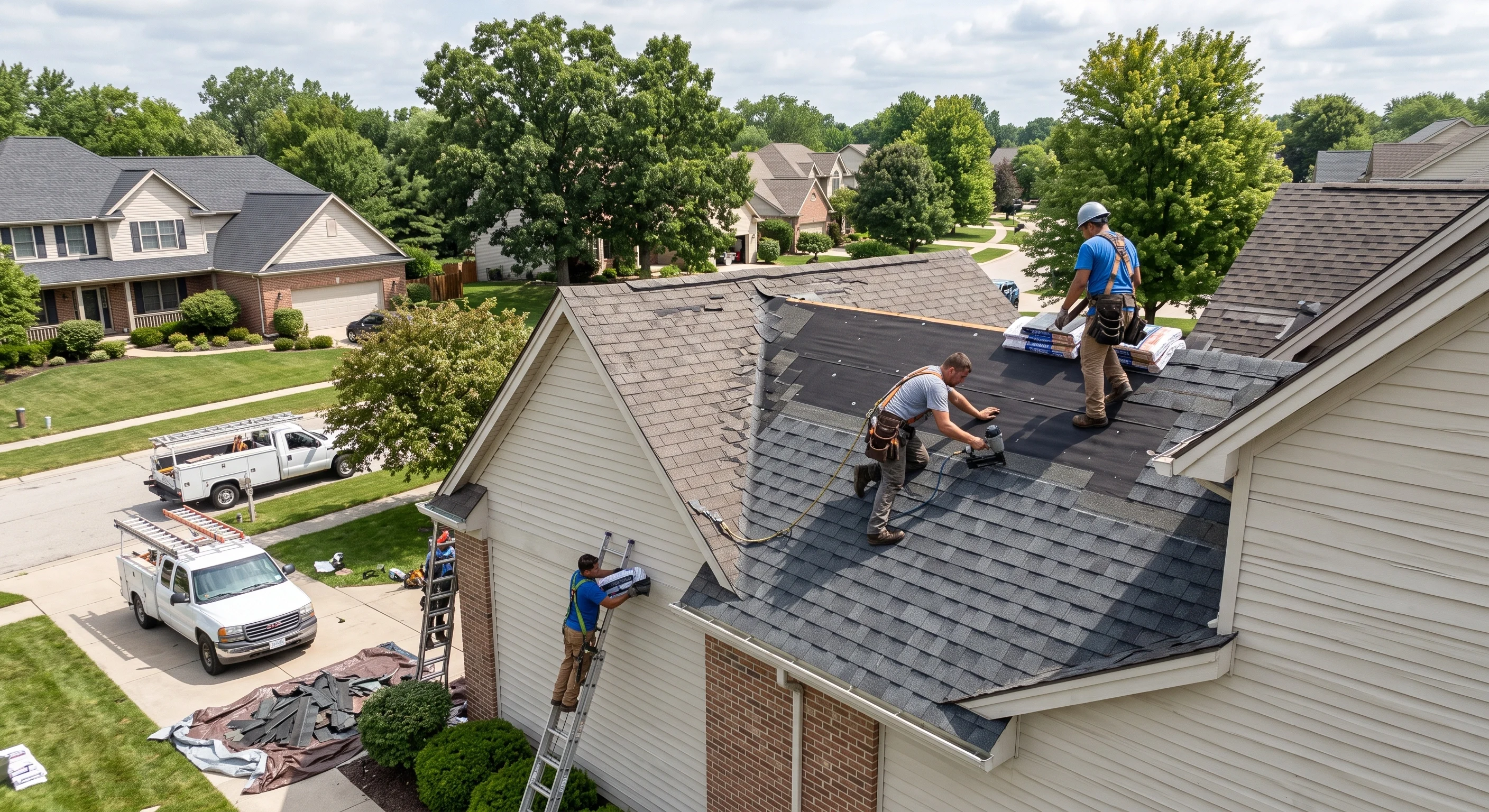
A roof is a connected assembly
Choosing a visible roofing product matters, but so do the less visible layers and transition details that move water and manage heat and moisture.
Roof Replacement
See how the system is addressed during replacement.
Explore Roof Replacement →Roof Repair
Investigate a localized system failure.
Explore Roof Repair →Contact
Discuss the roof type and concerns at your home.
Explore Contact →Useful signs, questions, and decision factors
The right next step depends on the condition of the affected material, the surrounding assembly, compatibility, access, and the goals for the home.
- Roof deck and visible substrate condition
- Water protection and underlayment
- Flashing at transitions and penetrations
- Ventilation, drainage, edge details, and roof covering
From concern to clear next step
Identify roof geometry and exposure
Review system conditions
Compare compatible material options
Define details in the written scope
Roofing Systems FAQs
Are shingles the whole roofing system?
No. They work with the deck, underlayment, flashing, penetrations, ventilation, drainage, and edge details.
Does every home need the same ventilation approach?
No. Ventilation should be considered with the roof and attic configuration rather than treated as a universal add-on.
Can materials be selected only by color?
Color matters, but compatibility, slope, exposure, maintenance, system details, and budget also deserve consideration.
Ready to talk about the exterior?
Share the property location, what you are seeing, and whether the concern involves siding, roofing, or both.