
Know What Should Be Checked After a Storm
A useful inspection separates visible damage, possible damage, normal wear, and areas that require closer access or additional evaluation.
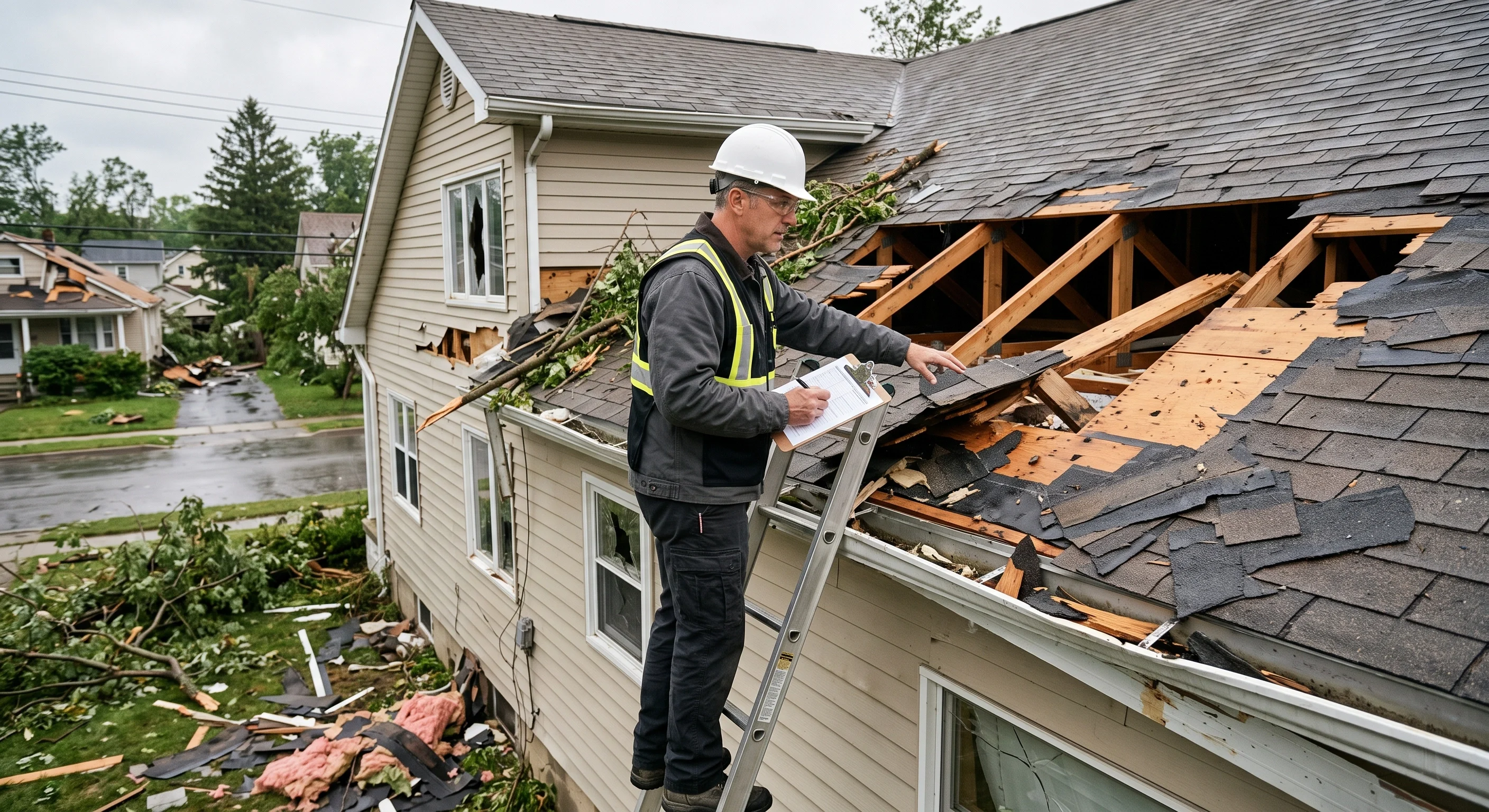
Inspection should lead to understandable findings
The goal is a clear next step: repair, replacement discussion, monitoring, or no work. It should not begin with a predetermined outcome.
Siding Storm Damage
Explore siding-specific evidence.
Explore Siding Storm Damage →Roof Storm Damage
Explore roof-specific evidence.
Explore Roof Storm Damage →Contact
Request an exterior conversation.
Explore Contact →Useful signs, questions, and decision factors
The right next step depends on the condition of the affected material, the surrounding assembly, compatibility, access, and the goals for the home.
- Roof surfaces, edges, valleys, flashing, and penetrations
- Siding faces, seams, corners, trim, and openings
- Accessible exterior drainage and transition points
- Interior signs connected to recent water entry
From concern to clear next step
Share the storm date and symptoms
Inspect accessible exterior areas
Document relevant findings
Discuss the most practical next step
Storm Damage Inspection FAQs
What outcomes can follow an inspection?
Findings may support a focused repair, broader replacement discussion, monitoring, or no recommended work.
Will you decide whether insurance pays?
No. Coverage decisions belong to the insurer and depend on the policy and claim facts.
What information helps before the visit?
The event date, photos from safe locations, observed changes, interior symptoms, and known prior conditions can be useful.
Ready to talk about the exterior?
Share the property location, what you are seeing, and whether the concern involves siding, roofing, or both.