
Assess Wind and Hail Concerns Without Guessing from the Ground
Missing material may be obvious, while lifted edges, creases, impact marks, flashing movement, and entry paths can require a closer professional assessment.
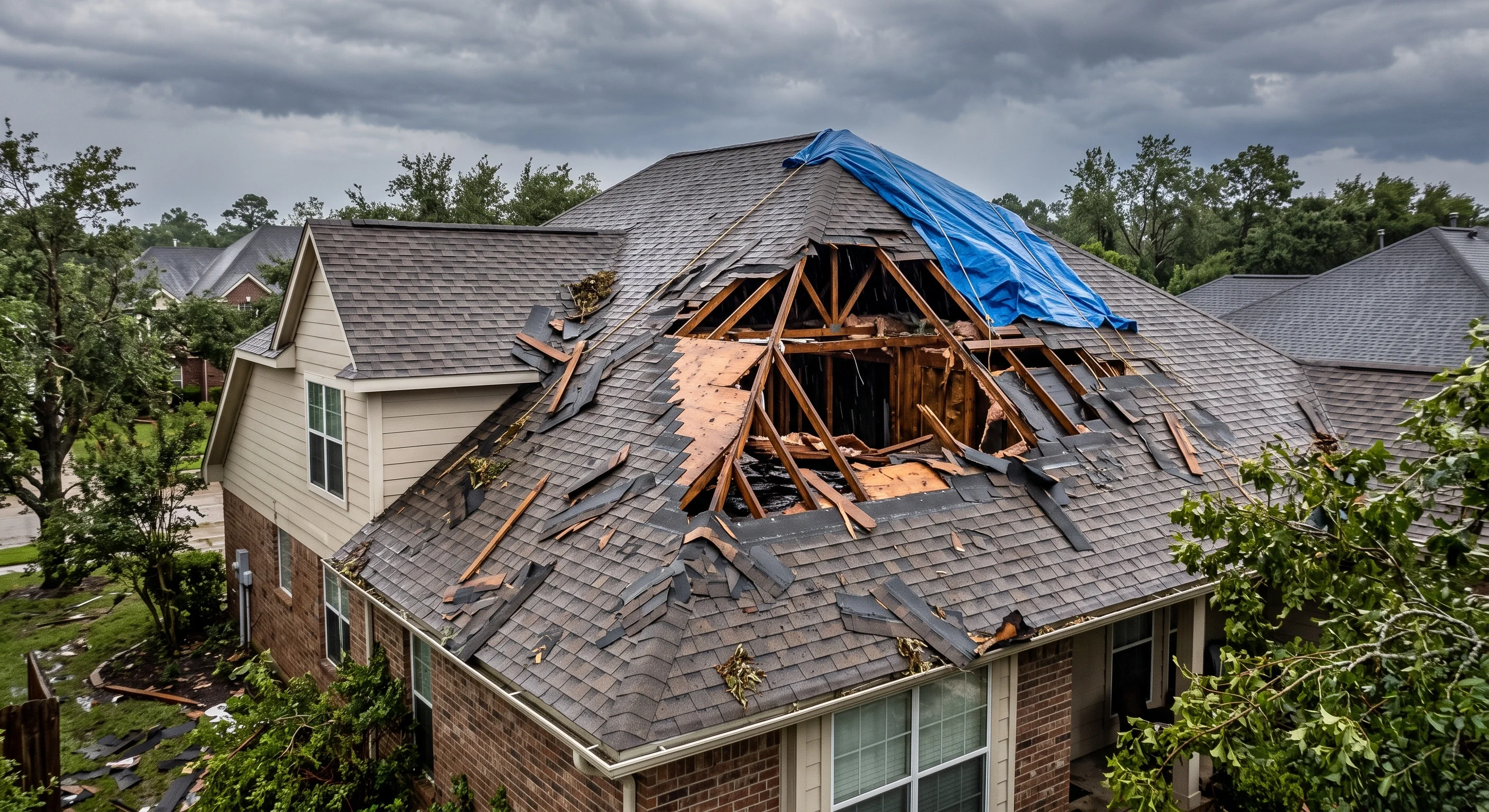
Safety and documentation come first
Avoid climbing on a wet or damaged roof. Photograph visible conditions from safe locations and note any new interior symptoms after the event.
Roof Repair
Explore focused repair decisions.
Explore Roof Repair →Roof Replacement
See when broader work enters the conversation.
Explore Roof Replacement →Storm Inspection
Review whole-exterior inspection scope.
Explore Storm Inspection →Useful signs, questions, and decision factors
The right next step depends on the condition of the affected material, the surrounding assembly, compatibility, access, and the goals for the home.
- Missing, lifted, creased, or displaced shingles
- Impact marks or damage near vents and flashing
- Tree or debris contact
- New leaks, stains, or dampness after the storm
From concern to clear next step
Stay off unsafe surfaces
Record visible symptoms
Inspect roof-system details
Review repair, replacement, or monitoring
Roof Storm Damage FAQs
Can I tell hail damage from the ground?
Not reliably in every case. Some damage requires safe close access and context.
Does storm damage mean replacement?
No. Extent, location, repairability, roof condition, and policy decisions all matter.
Can you guarantee claim approval?
No. A contractor can document conditions and scope; the insurer determines coverage under the policy.
Ready to talk about the exterior?
Share the property location, what you are seeing, and whether the concern involves siding, roofing, or both.